%201.svg)
Blogs
FATIGUE MANAGEMENT &
IMPAIRMENT DETECTION

Fitness for Work Evaluation and Remediation
Fitness for Work Evaluation
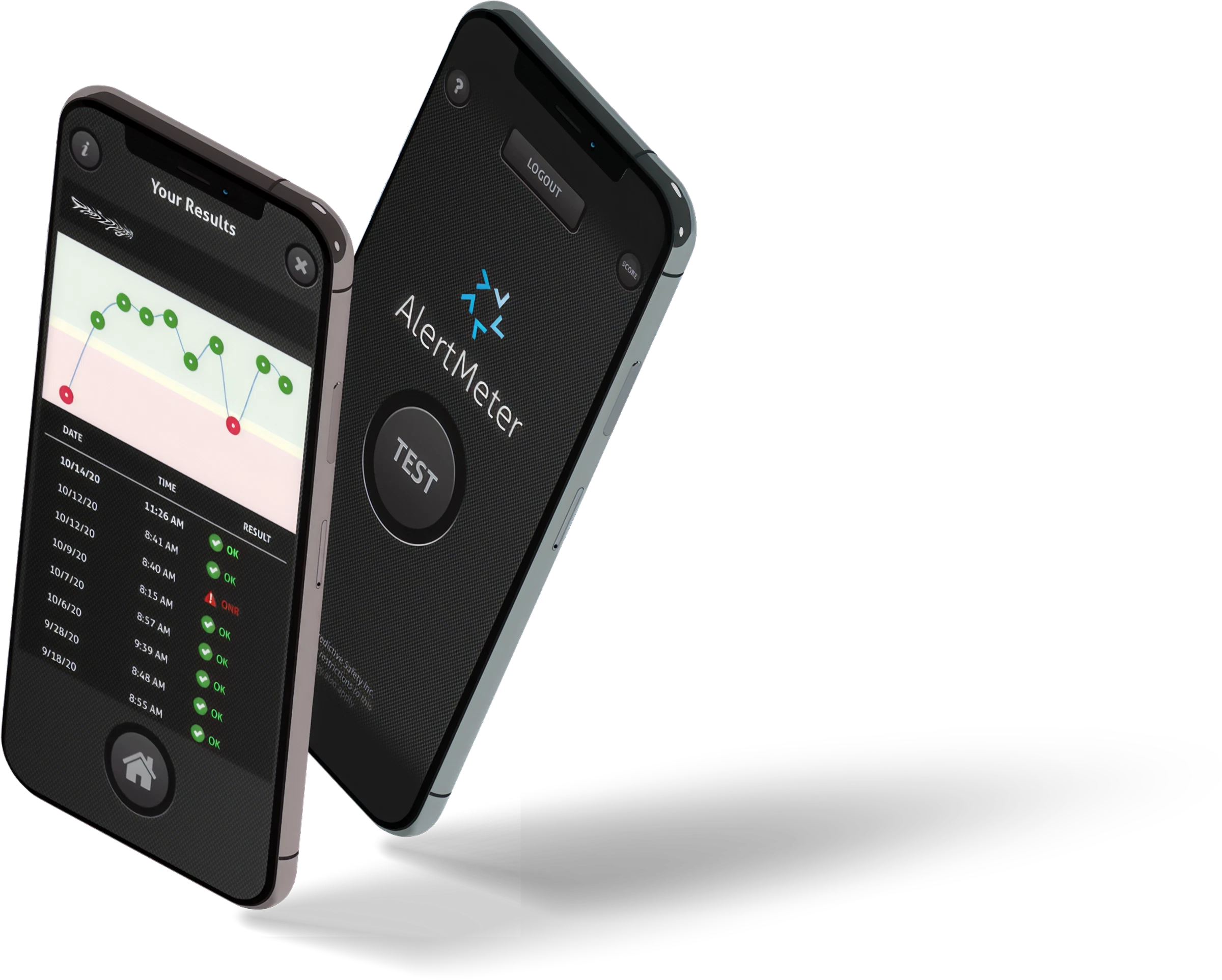
AlertMeter® is an an app that allows you to run a fitness for work evaluation process. It’s sensitive to a number of issues that diminish alertness. When an employee's AlertMeter® performance suggests that he or she may be experiencing diminished alertness and may be impaired or not fit for work, their test score is considered Outside Normal Range, or "ONR." So what should happen when an employee scores ONR on the AlertMeter® test and is identified as not being fit for work?
Leading and Lagging Safety indicators
Safety-sensitive workplaces often analyze safety performance metrics with leading and lagging safety indicators. The ability of managers and supervisors to identify these leading and lagging indicators and use them to influence workplace safety procedures is key in improving workplace safety and productivity.

AlertMeter® Industrial Safety Case Study
A Supervisor's Plight
A foreman for a large construction and engineering company named Mitchell supervises a crew of about thirty workers. He can remember the names of only a few of his crew, just those who have stuck around long enough to develop a rapport with him. But the remaining members of his crew have lately been an ever-changing assortment of people, most of whom have little experience in this kind of work, if any.

Management of Change (MOC) in Safety Processes
Making beneficial changes to a safety system or process often appears straightforward. But when implementing changes gets underway, organizations often encounter snags and obstacles that impede the change's success, and this process often exposes differing perceptions and misaligned commitments regarding safety among employees, supervisors, and managers.
Workplace Accidents - Why Do They Keep Happening?
How Many Workplace Accidents Are Too Many?
When trying to gather interest in our services from business leaders in high-hazard industries, a colleague heard from at least one executive that said his company “did not have that many injuries” to justify improving its safety system. But how many is “that many”? Would the injured employees agree with him that the company’s safety system was sufficient to protect them? How many injuries are acceptable before the safety system is considered ineffective, and why should any number of injuries be allowable at all?
-1.webp)
Empower a Safer Workforce
Discover how Predictive Safety can help you create a safer, more productive workforce, even during a historically tight labor market and high demand.